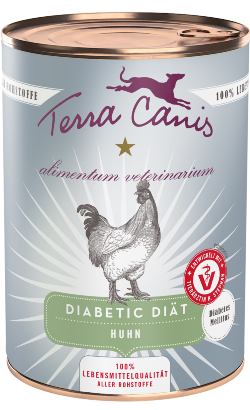
Terra Canis Ali-Vet Diabetic Chicken is a complete diet food for dogs.
Dietary guidelines for diabetics:
Diabetes mellitus Regulation of glucose supply Low mono- and disaccharide content
Dogs with diabetes must receive insulin for the rest of their lives. Furthermore, they must be fed a diet that keeps their blood sugar levels stable. Only pure, food-safe muscle meat is used in DIABETIC menus, while grains are not used. Highly digestible muscle meat provides healthy amino acids and omega-6 fatty acids without overloading the pancreas. The proportion of raw natural fiber from vegetables, fruits, and herbs is increased in all DIABETIC menus to slow the passage of food through the intestines, where nutrients are constantly released into the bloodstream. Blueberries, a focus of research, are added, as their secondary plant substances, especially anthocyanins, play a supportive role against diabetes. Artichoke leaves, aloe vera, and cumin are known to maintain stable blood sugar levels, particularly to prevent so-called "sugar spikes," and to have a positive effect on cholesterol levels. Fenugreek, which it contains, is considered a blood sugar reducer and is therefore antidiabetic. Lupin also has a general blood sugar-lowering effect and also provides valuable amino acids. Sage and thyme provide support through their variety of antioxidants and secondary plant substances. Ginseng, which it contains, is known for its positive effect on diabetes and its ability to reduce blood sugar levels, in particular to prevent so-called "sugar spikes," and to have a positive effect on cholesterol levels. Fenugreek, which it contains, is considered a blood sugar reducer and is therefore antidiabetic. Lupin also has a general blood sugar-lowering effect and also provides valuable amino acids. Sage and thyme provide support through their variety of antioxidants and secondary plant substances. Ginseng, which it contains, is known for its positive effect on diabetes and its ability to reduce blood sugar levels, in particular to prevent so-called "sugar spikes," and to have a positive effect on cholesterol levels. Fenugreek, which it contains, is considered a blood sugar reducer and is therefore antidiabetic. Lupin also has a general blood sugar-lowering effect and also provides valuable amino acids. Sage and thyme provide support through their variety of antioxidants and secondary plant substances. Ginseng, which it contains, is known for its positive effect on diabetes and its ability to reduce blood sugar levels. Sage and thyme provide support through their variety of antioxidants and secondary plant substances. Ginseng, which it contains, is known for its positive effect on diabetes and its ability to reduce blood sugar levels. Sage and thyme provide support through their variety of antioxidants and secondary plant substances. Ginseng, which it contains, is known for its positive effect on diabetes and its ability to reduce blood sugar levels.
Diabetes mellitus is a disease based on an endocrine disorder. A distinction is made between type 1 and type 2 diabetes. While very little insulin is produced in the pancreas in type 1 diabetes, type 2 diabetes is insulin resistant, so the mode of action is limited or eliminated. Type 1 diabetes traditionally occurs in young animals with a genetic predisposition and in fairly lean animals. Type 2 diabetes is known as "age-related diabetes," which occurs predominantly in older dogs and overweight animals. In obese patients, this type may be reversible when normal weight is regained. If there is not enough insulin or if it does not develop its full effect, glucose absorption by the cells is prevented, causing a massive increase in blood glucose levels. In addition to polydipsia (increased alcohol consumption) and polyuria (increased urination), reduced performance, polyphagia (increased appetite), and cataracts (as a late consequence of lens opacity) are classic symptoms of diabetes. Possible causes of diabetes include obesity, genetic predisposition, pancreatitis, and glucocorticoid administration. Currently, obesity is considered one of the main causes of the increased occurrence of so-called "sugar dogs."


 Talk to our in-house vet Joana via WhatsApp +351 910 480 541